Old English Font VWX: A Designer’s Review for Business Branding
First Impressions: Classic Meets Professional in Old English Font VWX
As an embroidery designer with years of experience crafting custom visuals for small businesses, the Old English Font VWX immediately struck me as a strong contender for versatile branding use. The name itself evokes a timeless aesthetic, and from the product description, this machine embroidery design promises clean, high-quality execution. It reads as both elegant and professional—perfect for businesses looking to add a touch of tradition or heritage to their merchandise without sacrificing clarity or modern appeal.
Given its category under Back To School, this font could be ideal for school uniforms, teacher gifts, or student gear, but its design potential clearly extends beyond that niche. The promise of personalization—names, dates, quotes—suggests flexibility for both embroidered patches and direct fabric applications.
Real Business Use: From Patches to Product Labels
When evaluating an embroidery file for small business use, I always consider the range of applications. The Old English Font VWX seems well-suited for:
- Branded patches for boutique merchandise or Etsy branding
- Custom apparel like staff uniforms, aprons, and caps
- Tote bag design with a premium, handmade presentation
- Work shirts with embroidered names or titles
- Product packaging accents or embroidered labels for handmade goods
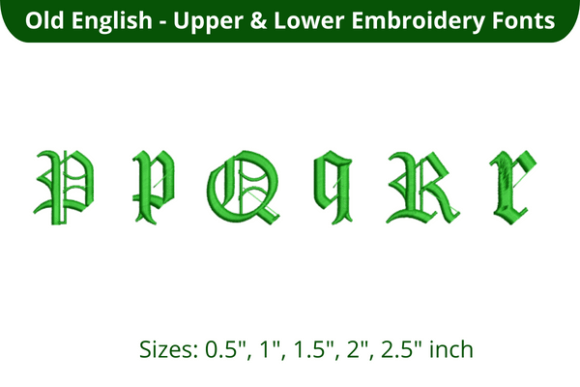
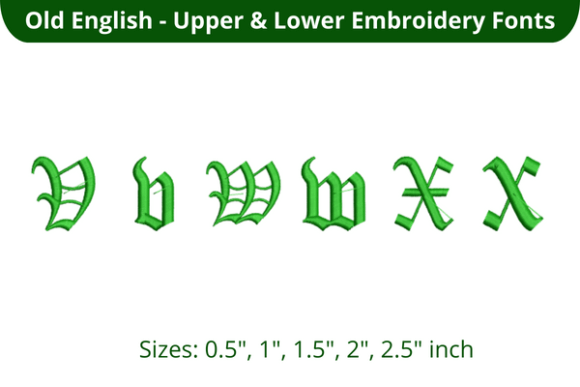
Its structured lettering and likely ornamental flourishes (based on the “Old English” style) lend a sense of authority and craftsmanship—ideal for local bakeries, florists, or creative studios that want to elevate their brand identity through custom embroidery. This font could also work well for event merch or customer gifts, especially when combined with other design assets to create a cohesive visual language.
Where to Use with Caution
While the Old English Font VWX offers strong visual appeal, it’s important to consider its limitations in real-world applications:
- Small patch sizes: Intricate fonts can lose clarity when scaled down, so test this embroidery file at the intended patch size before production.
- Cap fronts: Curved surfaces may distort the font’s structure—review stitch density and spacing carefully.
- Dark uniforms: Ensure thread color contrast is sufficient for readability, especially for names or quotes.
- Textured fabric: Some materials may not support the level of detail expected from an Old English style font.
- High stitch density: May lead to stiffness or fabric puckering if not balanced with proper stabilizer and hoop size.
These are all common challenges with decorative fonts, but they’re worth noting when presenting options to clients or planning a commercial embroidery project. Always test the embroidery file on actual fabric before committing to large runs.
Brand Impact: Building Trust and Recognition
Font choice plays a critical role in brand identity. The Old English Font VWX offers a distinctive look that can help a small business stand out. It reads as premium and handmade, which aligns well with Etsy sellers, crafters, and local brands aiming to communicate authenticity and quality.
When used consistently across tote bags, aprons, and product labels, this font can become a visual anchor of your brand presence. It adds a sense of professionalism and intentionality, which can boost customer trust and recognition. However, it’s important to balance its ornate qualities with simpler design elements to avoid overwhelming the viewer or diluting visual consistency.
Practical Notes for Embroidery Designers
Before using the Old English Font VWX in a commercial embroidery project, here are some practical steps I recommend:
- Test in black and white first: This helps assess contrast and clarity without color distractions.
- Check small patch performance: Especially important for embroidered patches with limited space.
- Review thread color contrast: Especially for use on dark fabrics or uniforms.
- Inspect spacing and legibility: Ornate fonts can sometimes have tight spacing that reduces readability.
- Confirm hoop size compatibility: Ensure the font fits within your machine’s hoop dimensions.
- Test on real fabric: Different materials react differently to stitch density and thread types.
- Use the right stabilizer: Prevents shifting and puckering, especially on stretchy or textured materials.
- Create a printable mockup: Helps clients visualize the finished product before embroidery begins.
- Compare with existing design assets: Ensures visual harmony with logos, icons, or other embroidery files.
- Confirm commercial licensing: Always verify that the digital embroidery file allows for business use before production.
Final Thoughts: A Valuable Addition to Your Design Toolkit
The Old English Font VWX is more than just a decorative font—it’s a tool for storytelling and brand building. Whether you're creating embroidered patches for a local café, custom caps for a boutique, or branded tote bags for a handmade shop, this font brings a sense of tradition and elegance that can elevate your work.
For small business owners and embroidery shops, it offers a professional, recognizable design element that supports visual consistency and customer engagement. Just remember to test thoroughly, plan carefully, and always align its use with the brand’s overall identity and fabric choices.