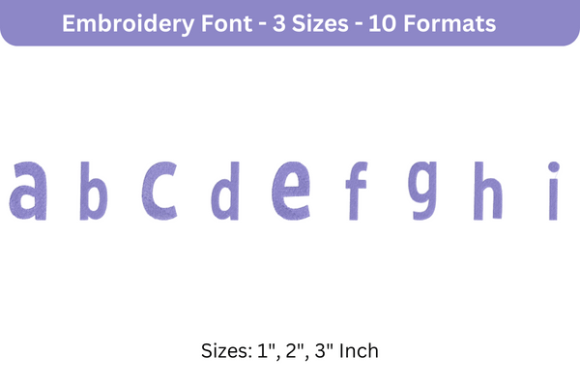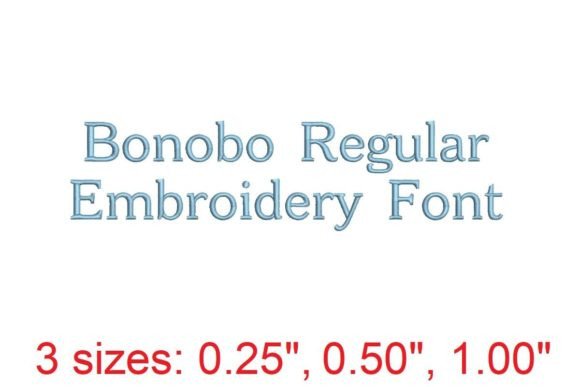
Bonobo Regular Embroidery Font: A Designer’s Review for Business Branding
First Impressions: Clean, Versatile, and Business-Ready
As an embroidery designer with years of experience crafting branded merchandise for small businesses, I was immediately drawn to the Bonobo Regular Embroidery Font. The name suggests a modern, approachable design—and the font delivers. It strikes a perfect balance between professional and personable, making it ideal for businesses looking to project both reliability and warmth.
From the product description alone, I can tell this font is built for machine embroidery use, with clean lines and consistent spacing that suggest it will translate well across a variety of applications—from embroidered patches to tote bag designs.
Real-World Use: Perfect for Branded Merchandise and Custom Apparel
Let’s get practical. Small businesses—from local cafés to handmade brands—need versatile, high-quality embroidery files that can be used across multiple touchpoints. Bonobo Regular holds up impressively in that department.
- Embroidered patches: This font scales well, maintaining legibility even at smaller sizes. That makes it great for creating custom patches that can be sewn onto aprons, jackets, or bags.
- Staff uniforms: Whether you're adding names to work shirts or branding to caps, Bonobo Regular offers a clean, professional look without being too stiff or formal.
- Apron embroidery: For a bakery or boutique, a well-placed embroidered logo or tagline using this font adds a touch of sophistication and personalization.
- Cap embroidery: The font’s balanced proportions work well on curved surfaces, making it a solid choice for cap fronts where distortion can be an issue.
- Tote bag design: It reads clearly even from a distance, which is essential when branding tote bags that double as walking advertisements.
It’s also a strong contender for digital embroidery projects like printable mockups and design assets. If you're creating commercial embroidery files for Etsy or digital product platforms, Bonobo Regular gives you a professional baseline that clients can easily customize.
Where to Use with Caution
While Bonobo Regular is a strong performer overall, there are a few scenarios where it needs careful handling:
- Small patch sizes: While it scales well, extreme miniaturization can cause letters to blend, especially with tighter spacing.
- Cap fronts: Curved surfaces may affect legibility if not digitized with proper compensation.
- Tiny lettering: Avoid using this font for extremely small text unless you test it first on fabric.
- Textured fabric: Rougher materials may distort the appearance of fine lines or tight stitch areas.
- Dark uniforms: High thread color contrast is essential for visibility—test with light thread colors like white or yellow.
- Frequent washing: Dense stitching can stiffen fabric over time. Consider stitch density and stabilizer use for long-lasting results.
Brand Identity Impact: Building Trust and Recognition
For small businesses, brand consistency is everything. Bonobo Regular helps establish that consistency across embroidered items. Its uniform lettering and clean finish lend a sense of professionalism that builds customer trust.
Whether it's used on a boutique tote bag or a custom apron for a coffee shop, this font supports a cohesive brand identity. It reads as modern without being trendy, ensuring your business doesn’t look outdated in a few seasons.
For handmade brands or Etsy sellers, Bonobo Regular strikes the right balance between craftsmanship and polish. It enhances the perceived value of products without overpowering the handmade aesthetic. In short, it makes your brand feel real, reliable, and ready for growth.
Practical Notes for Embroidery Designers
Before committing Bonobo Regular to a client project or commercial embroidery file, here are a few steps I always take:
- Test it in black and white first: Monochrome testing helps identify spacing or clarity issues before adding color.
- Check patch size compatibility: Always preview the font at the intended size to avoid readability problems.
- Review thread color contrast: Especially on dark or textured fabrics, ensure your chosen thread stands out clearly.
- Inspect spacing and alignment: Even well-designed fonts can have inconsistencies when scaled or stitched.
- Confirm hoop size requirements: Make sure the font fits within your available hoop dimensions.
- Test on real fabric: Digital mockups are helpful, but actual fabric tests are essential for quality control.
- Use proper stabilizer: Especially for stretchy or textured materials, the right stabilizer ensures clean, durable stitching.
- Create a printable mockup: Clients appreciate seeing how the design integrates into the final product before production.
- Compare with other design assets: Ensure the font works alongside your existing logos, graphics, and branding elements.
- Confirm commercial licensing: Always verify that the font is licensed for commercial use before selling it as part of a product or service.
Final Thoughts: A Reliable Choice for Small Business Embroidery
The Bonobo Regular Embroidery Font is more than just a decorative design—it’s a versatile tool for building brand identity through embroidered patches, custom apparel, and small business merch. Whether you're creating a chest logo for staff uniforms or a subtle sleeve detail on aprons, this font delivers a clean, professional finish that aligns with modern branding needs.
For embroidery shops, Etsy sellers, and craft businesses, Bonobo Regular offers a solid foundation for both digital embroidery files and physical product branding. It’s a smart addition to your design assets, especially when you're aiming to create a consistent, recognizable brand presence across multiple merchandise types.