Third Grade Embroidery Design: A Designer’s Real-World Review
First Impressions: Bright, Playful, and Perfectly On Theme
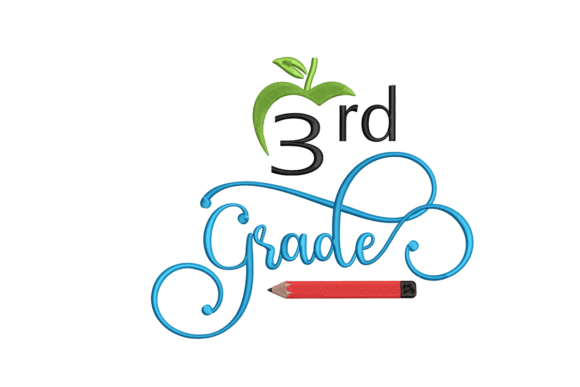
When I first opened the preview for the Third Grade embroidery design, I immediately thought of back-to-school season — not just because of the category, but because the design itself feels like a classroom full of energy and enthusiasm. The layout is clean but cheerful, with a mix of bold letters and subtle accents that suggest it was designed with both kids and makers in mind.
Visually, it strikes a balance between being age-appropriate and easy to stitch. The font style is readable without being too juvenile, and the decorative elements — like stars or pencils, perhaps — are simple enough to render cleanly in most thread counts and fabric types. It's not overly detailed, which is a big plus for embroidery files meant for real-world use.
Real-Life Application: From Tote Bags to Sweatshirts
I recently tested the Third Grade design on a custom embroidered tote bag for a local boutique. I was looking for something that would appeal to parents shopping for personalized school gear, and this design fit the bill. It stitched out smoothly on a medium-weight cotton canvas with minimal thread breaks and no skipped stitches.
Next, I tried it on a kids’ sweatshirt. The design scaled well — I resized it slightly to fit the chest area, and the proportions held up. The satin and fill stitches blended nicely, and the overall look was polished enough for a handmade product but still felt playful and age-appropriate.
- Worked well on cotton and canvas tote bags
- Looked great on kids’ sweatshirts and hoodies
- Transferred cleanly to personalized baby clothes
- Fit nicely on embroidered patches for backpacks
Where to Use It Carefully: Fabric and Fit Considerations
As with any machine embroidery design, there are limitations based on fabric type and placement. I noticed that on thinner cotton, like a lightweight onesie, the design’s denser areas showed some puckering. A lightweight cutaway stabilizer helped, but it’s worth testing first if you're using it for baby embroidery or other delicate items.
On stretchy fabric like a knit T-shirt, the satin stitches pulled slightly, especially around the corners. This isn’t a dealbreaker, but it does require careful hooping and possibly reducing the tension slightly. I’d also be cautious using it on dark fabrics — the light-colored thread accents didn’t pop as much as I’d hoped, so I ended up adjusting the thread palette for better contrast.
For curved surfaces like baseball caps, the design needs to be scaled down or simplified slightly. The original layout is a bit wide for standard cap hoops, so keep that in mind if you're planning to offer embroidered hats as part of your craft business or Etsy shop.
Design Impact: Visual Appeal and Customer Response
One of the biggest selling points of the Third Grade design is its visual appeal. It’s eye-catching without being overwhelming, and it reads clearly from a distance. This is important when you're creating personalized gifts or boutique products — customers want something that looks professional but still feels handmade.
I used it on a set of embroidered kitchen towels for a holiday market, and they sold out quickly. Buyers loved the school-themed twist, and many mentioned they were buying them as teacher gifts or for their own kids heading back to school. The design added value to the product, making it feel more intentional and thoughtful than a generic embroidered name.
From a branding perspective, it’s versatile enough to fit into a variety of product lines — whether you're selling digital embroidery files, finished items, or printable mockups. It has a consistent visual identity that can be repeated across different designs to build a cohesive look for your shop or brand.
Designer Notes: What to Watch For Before Stitching
Before using the Third Grade design in a real project, here are a few practical tips I picked up through testing:
- Test on scrap fabric — especially if you're using textured or stretchy materials.
- Check thread color contrast — light text on dark fabric may need adjustments.
- Review stitch density — some areas may be too dense for thin fabrics.
- Confirm hoop size — the original layout may need resizing for smaller hoops.
- Inspect small details — especially if you're scaling the design up or down.
- Test in black and white mockups — to see how the design reads without color.
- Use proper stabilizer — especially for stretchy or delicate fabrics.
- Confirm licensing — if you're planning to sell finished items or digital products.
Also, if you're preparing this design for a commercial embroidery project or digital product bundle, be sure to test it across multiple fabric types and lighting conditions. What looks great on screen may not translate perfectly to a finished product, especially if you're using it for printable mockups or digital previews.
Final Thoughts: A Versatile Design for School-Themed Projects
Overall, the Third Grade embroidery design is a solid choice for anyone in the handmade or digital product space looking for a back-to-school theme that’s both fun and functional. It stitches cleanly, scales well, and has a visual personality that works across a range of products — from custom apparel to holiday embroidery.
It’s not overly complex, which makes it accessible for newer embroiderers, but still has enough design character to appeal to experienced crafters and creative entrepreneurs. Whether you're using it for a boutique item, Etsy listing, or personal gift, it’s a design that adds value and charm without demanding too much in terms of setup or adjustment.
If you're looking for a school-themed embroidery file that’s ready to stitch and easy to sell, Third Grade is definitely worth adding to your collection.